
Rowing history

AVIRON - Sport olympique
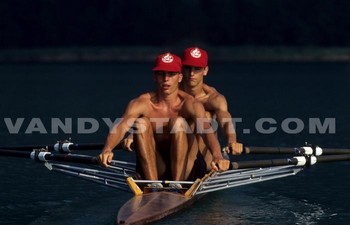
Un aviron est le levier utilisé pour propulser et barrer un bateau sur l’eau, composé d’un long manche en bois prolongé d’une palette.
Historique
Des textes anciens, nous rapportent le témoignage d’antiques confrontations à la rame en Egypte et à Rome.Dans l’Antiquité, les Grecs, les Phéniciens et les Egyptiens organisaient des courses de galères ayant lieu sur des plans d’eau spécialement conçus pour l’occasion. La première compétition sous forme de ‘régate’ eut lieu en 1315 à Venise et en 1642 à Malte. Dès 1715, les bateliers anglais courent sur la Tamise une course d’environ 8 kilomètres. Cette course, conçue par un certain Thomas Doggett, s’appelle le “Doggett’s Coat and Badge Race”. Toujours d’actualité, elle figure parmi les plus anciennes courses d’aviron au monde.
Il faut attendre 1829 pour assister au premier match “en huit” opposant sur 6 838 mètres les équipes des célèbres universités d’Oxford et Cambridge, et qui est l’une des plus anciennes compétitions sportives modernes sans oublier la fameuse Henley Royal Regatta attirant toujours les meilleurs rameurs du monde.
En France, les premiers balbutiements de l’aviron datent de 1830, époque à laquelle Alphonse Karr, Théophile Gautier, Adolphe Adam mettent à la mode les promenades sur l’eau, en se lançant dans de grandes randonnées sur la Seine, vers Rouen ou Le Havre. A cette époque se créent les premières sociétés chargées d’organiser les épreuves et d’en édicter le règlement : la Société des régates du Havre est fondée en 1838, celle de la baie de la Somme, à Saint-Valéry, en 1846. Puis d’autres voient le jour à Rouen en 1850, à Paris en 1853, à Bordeaux, à Lyon et à Reims. La Fédération française des sociétés d’aviron est fondée en 1893.
.gif)
La Fédération Internationale (FISA), la plus ancienne fédération sportive, fut fondée en 1892 (actuellement 118 pays sont affiliés).
Aviron et l’Olympisme
En 1896, l’aviron entre dans l’Olympisme, les courses n’ont pas eu lieu à cause du mauvais temps. Les courses sont
isées entre l'aviron de couple et l’aviron de pointe, selon les catégories poids lourds et poids légers. L’aviron féminin est devenu olympique en 1996, elles s'affrontent pour six des quatorze médailles en jeu.
Les dates marquantes
1315 : Première compétition (régate) à Venise.
1642 : Régate à Malte
1698 : Régate à Gravesend (GBR)
1778 : Première course de huit, Chatham contre Invincible, du pont de Westminster à Richmond, Londres.
1811 : Course à New York entre Whitehall Four Knickerbocker et Invincible.
1829 : Première course de huit entre les équipes des universités d’Oxford et de Cambridge.
1831 : Premier championnat professionnel de skiff entre C. Campbell (Westminster) et J. Williams (Hammersmith).
1839 : Régate de Henley
1845 : Traversée de Douvres à Boulogne par un bateau de six rameurs.
1852 : Première course opposant les universités américains de Yale et de Harvard sur le lac Winnipesaukee dans le New Hamshire.
1859 : Première course entre des clubs français et anglais.
1867 : Quatre Canadiens du Saint James Boat Club, mirent de la graisse sur leurs culottes en cuir et sur les sièges en bois. Grâce à cette astuce, ils avaient inventé le principe de la coulisse, une véritable révolution pour l’aviron.
1870 : Le docteur Schiller introduit des sièges à coulisses en utilisant des petites roues.
1893 : Premier championnat d’Europe en skiff gagné par le Belge Edouard Lescrauwaet. Ils furent organisés jusqu’en 1973 dans plusieurs catégories.
1937 : Ouverture du ‘Bosbaan’ d’Amsterdam, premier bassin d’aviron artificiel.
1944 : l’Argentin Benito Romero rame 1200 km de Avellaneda (ARG) à Porte Alegre (BRE).
1962 : Premier Championnat du Monde masculin.
1974 : Premier Championnat du Monde féminin et premier Championnat du Monde masculin poids légers.
1976 : Première participation des rameuses aux Jeux Olympiques.
1985 : Premier Championnat du Monde poids légers.
1996 : Les poids légers font leur entrée aux Jeux Olympiques.
Compétition
Un ou plusieurs rameurs dans un bateau essaient de parcourir une distance dans le minimum de temps sur un plan d’eau.
L'aviron est une épreuve d'endurance, qui se termine à une vitesse dépassant les 10 mètres par seconde. Les équipages pagaient les 1000 mètres du milieu à un rythme d'environ 40 coups d'aviron à la minute et, sur les 500 premiers et les 500 derniers mètres, ils ont une vitesse supérieure donnant jusqu'à 47 coups par minute.
Un rameur a un aviron dans chaque main dans l'aviron de couple et un seul aviron pour les deux mains dans l'aviron de pointe. Les bateaux accueillent un, deux, quatre ou huit rameurs. A huit rameurs, un barreur est chargé de diriger le bateau et l'équipage mais, sur tous les autres bateaux, c'est un rameur qui barre l'embarcation grâce à une petite barre au pied.
Le plan d’eau
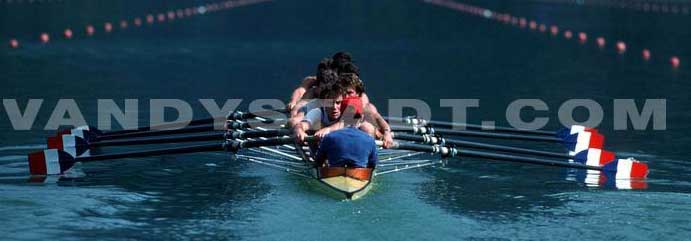
Le parcours doit être en ligne droite et comporter au moins 6 couloirs et au plus 8.
Les courses de championnat se disputent sur 2 000 mètres avec six couloirs en ligne droite délimités par des bouées. Il y a jusqu’à quatre étapes pour atteindre la finale, soit éliminatoires, repêchages, demi-finales et finales. Les repêchages regroupent les équipes perdantes aux éliminatoires, ce qui signifie que chaque équipe qui a perdu en éliminatoire obtient une deuxième chance avant d’être éliminée. On procède à un tirage au sort après chaque étape selon des systèmes alternatifs et non diffusés à l’avance. Les trois derniers de chaque demi-finale disputent la finale B pour les places 7 à 12.
Les bateaux
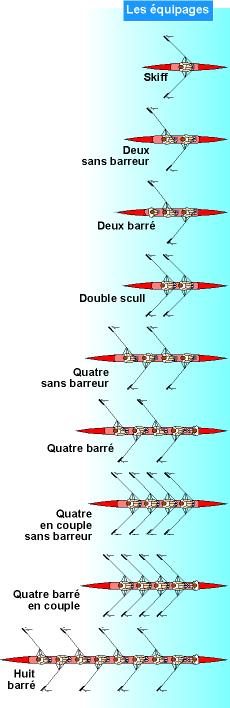
Traditionnellement, les bateaux ou les coques étaient en bois; maintenant ils sont souvent fabriqués en fibres de carbone et en plastique. Ils ont une largeur de 59,70 à 62,20 cm. Une petite dérive sous la coque assure la stabilité du bateau. Un gouvernail est attaché à la dérive ou à l’entrave (excepté sur les bateaux de couple). Une boule blanche est fixée à la proue (mesure de sécurité, photo-finish). Un bordage évite que les vagues pénètrent dans le bateau. Des sièges à roulettes coulissent sur des rails.
Les embarcations sont
isées en trois catégories :
· les embarcations de formes, de dimensions et de constructions libres,
· les yoles et les canoës,
· les yolettes.
Les pelles ou avirons
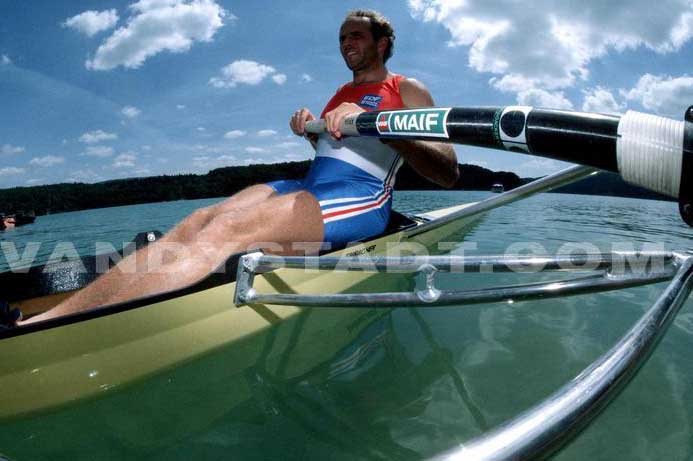
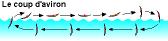
Les premiers avirons étaient en bois et la pelle avait une forme symétrique. Actuellement, ils sont en carbone et la pelle a une forme asymétrique. Ils sont creux pour réduire leurs poids et fixés au bateau par des portants adaptables. La pelle asymétrique maximise l'appui dans l'eau. Il n’y a pas de limitation quant à la dimension et la forme des avirons. La longueur moyenne d’un aviron de pointe est de 3,81 m et de 2,98 m pour un aviron de couple.
Les classes de bateaux
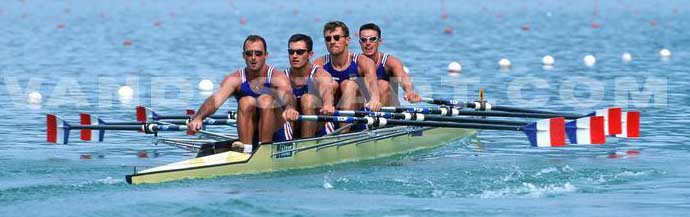
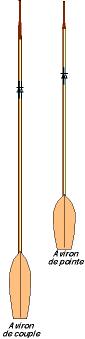
Il y a des épreuves en couple et en pointe chez les femmes et les hommes: un rameur en couple, deux et quatre de couple, deux de couple poids léger, huit de pointe avec barreur et deux de pointe sans barreur. Les hommes ont d’autres épreuves qui sont le quatre de pointe sans barreur ainsi que le quatre de pointe sans barreur poids léger.
Il y a huit classes de bateaux dont cinq pour l’aviron de pointe où le rameur n’utilise qu’un aviron qu’il tient des deux mains et trois pour l’aviron de couple où le rameur tient une rame dans chaque main. Dans certaines classes, il y a un barreur qui est soit assis à la poupe, soit couché à la proue du bateau.
A retenir
- le skiff est un bateau à 1 rameur avec deux rames
- le double est un bateau de couple pour deux rameurs
- le quatre est un bateau de pointe pour quatre rameurs avec ou sans barreur.
- le huit est un bateau de pointe pour huit rameurs et un barreur
Les bateaux de pointe avec une rame pour chaque rameur sont les bateaux suivants :
• 2- = Deux sans barreur (longueur 10,40 m, poids 27 kg).
• 2+ =Deux avec barreur (longueur 10,40 m, poids 32 kg).
• 4- = Quatre sans barreur (longueur 13,40 m, poids 50 kg).
• 4+ =Quatre avec barreur (longueur 13,70 m, poids 51 kg).
• 8+ =Huit (longueur 19,90 m, poids 96 kg).
Les bateaux armés en couple avec deux rames pour chaque rameur sont :
• 1x =Skiff (longueur 8,20 m, poids 14 kg; vitesse 18,20 km/h chez les hommes et 16,83 km/h chez les femmes).
• 2x =Deux de couple (longueur 10,40 m, poids 27 kg; vitesse 19,82 km/h).
• 4x =Quatre de couple (longueur 13,40 m, poids 52 kg).
- en pointe : un aviron manié à deux mains.
- en couple : le rameur a deux avirons.
- skiff : un rameur avec deux avirons.
- deux sans barreur : deux rameurs en pointe.
- double scull : deux rameurs en couple.
- deux barré : deux rameurs en pointe plus un barreur.
- quatre sans barreur : quatre rameurs en pointe.
- quatre de couple sans barreur : quatre rameurs en couple.
- quatre barré : quatre rameurs en pointe avec un rameur.
- huit : huit rameurs en pointe avec un rameur.
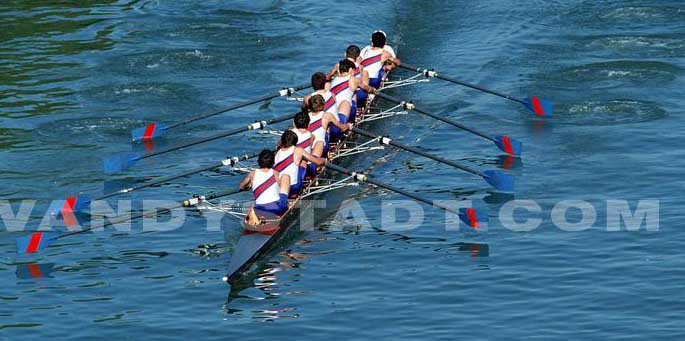
Le skiff est le seul bateau piloté par un seul rameur. Le mot ‘skiff’ trouve des origines dans des mots anglais et hollandais. C’est aussi un dérivé du vieux français ‘esquif’, un mot dont les racines sont italiennes (schifo). Par extension, le mot désigne des embarcations de petite taille.
Bon à savoir :
- un rameur dépense env. 600 calories par heure
- un rameur donne une moyenne de 40 coups de pelle par minute lors d’une compétition contre 10 coups de pelle en entraînement.
- un rameur parcourt chaque année entre 5000 et 6000 kilomètres en entraînement à raison d’une dizaine de sorties par semaine d’environ 20 km chacune. Il effectue aussi des séances régulières sur ergomètres (l’aviron en salle) et des sorties intensives de course à pied, de vélo et de ski de fond.
A retenir.................Ergomètre, c’est l’aviron en salle : le record du monde appartient depuis 2001 à l'Allemand Matthias Siejkowski qui a couvert les 2 km virtuels en 5'37". Le record féminin est détenu depuis 2003 par Georgina Evers-Swindell NZE en 6'28"6.
Le barreur
Le barreur fait face aux rameurs. Comme son nom indique, c’est lui qui tient la barre de l’embarcation. Il dirige les bateaux en donnant ses instructions aux rameurs, indiquant la cadence à suivre et l’évolution de la course. Seulement les bateaux en deux barré, quatre barré et huit ont un barreur. Le poids du barreur est fixé depuis 1997 à 55 kg (poids minimal) chez les seniors hommes et à 50 kg (poids minimal) chez les femmes et les autres catégories. Pour atteindre ce poids, le barreur peut disposer d’une surcharge de 5 kg maximum, y compris son équipement.
La pesée
Les barreurs doivent être pesés au plus tôt 2 heures, et au plus tard 1 heure avant la première course à laquelle ils participent lors de la journée de régate.
Le poids moyen des rameurs d’une équipe (sans le barreur) ne doit pas dépasser 70 kg.
Le poids de chaque rameur pris in
iduellement ne doit pas dépasser 72,5 kg.
Le poids des skiffeurs est limité à 72,5 kg.
Chez les femmes, le poids moyen des rameuses d’une équipe (sans la barreuse) ne doit pas dépasser 57 kg.
Tout savoir sur le huit
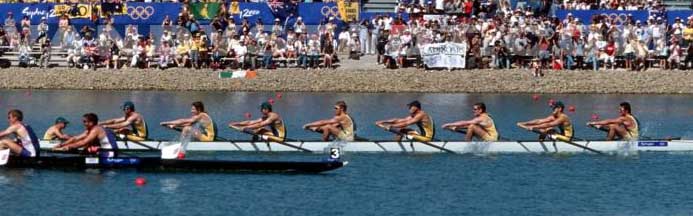
- la longueur est de 18 mètres pour 94 kg. Longueur des avirons : 3,80 m
- la cadence d'un rameur en huit est de 42 coups par minute !
- le huit met environ 5'40 à 5'45 pour parcourir la distance de 2 000 m lors d'une compétition.
L’équipage de huit est composée de 8 rameur plus un barreur avec un rôle spécifique pour chacun.
Le Barreur, en avant du bateau face à l’équipage, barre le bateau, doit le garder dans l’axe et lui faire éviter les bouées. Il est la voix du bateau informant l’équipage de la situation, faisant appliquer la cadence, la tactique établie.
Le Chef de nage donne le rythme de toutes ces données en impulsant la cadence à suivre. Il est de près suivi par le n°2, le lieutenant qui est le relais vers le reste de l’équipage.
Les 3, 4, 5 et 6 forment le moteur du bateau.
Les 7 et 8 en queue du bateau dirigent le bateau au départ avec leur pelles. Leur rôle est d’aligner à la perfection l’embarquement.
Les poids légers
Poids léger : Catégorie selon le poids pour certaines épreuves dames pesant 59 kilogrammes ou moins (moyenne de 57 kg pour l’équipage) et pour les messieurs pesant 72,5 kg ou moins (moyenne de 70 kg pour l’équipage).
Cette catégorie a été créée dans les années 1970 à la demande des pays asiatiques et maghrébins dont l'accès au haut niveau international était gêné par le petit gabarit de leurs sportifs. En aviron, comme dans le basket, la taille est un élément déterminant de la réussite. Les championnats du monde existent depuis 1974 pour les hommes et 1985 pour les femmes. Les poids légers sont devenus sports olympiques en 1996 en ce qui concerne le 2 de couple hommes et femmes ainsi que le 4 sans barreur hommes.
Les championnats du monde en salle (l’ergomètre) se disputent sur une longueur virtuelle de 2000 m.
Vitesse
Un skiffeur de haut niveau rame sur une distance de 2000 m à environ 18,2 km/h (16,8 km/h pour les rameuses); les rameurs d’un huit arrivent à propulser leur embarcation sur un rythme de 22,5 km/h (20,2 km pour les rameuses).
Petite histoire : il n’y a jamais de podium en aviron pour des raisons logistiques car un podium pour le skiff n’a pas la même dimension que le podium pour un huit. C’est avant tout un signe de respect entre les rameurs de voir tous les médaillés alignés sur un même niveau au ponton d’honneur.
Lexique
· bâbord : la gauche de l’embarcation.
· tribord : la droite de l’embarcation.
· chef de nage : le premier rameur et le dernier à franchir la ligne d’arrivée qui fixe la cadence. Il tourne le dos à ses coéquipiers;
· barreur : il donne le rythme ou la cadence à suivre à ses coéquipiers.
· bouillons : remous d’eau ou tourbillons laissés par les avirons.
· cadence : nombre de coups exécutés à la minute (rythme)
· chef de nage : il est le rameur placé en tête du bateau faisant face au plan d’eau. Il est chargé de donner le tempo à suivre à ses équipiers. Il n’a pas de vision d’ensemble de la course contrairement au rameur placé en dernière position.
· enlevage : le sprint final.
. esquimauter : se remettre à l'endroit, après une chute, sans quitter le bateau, en trouvant un appui sur l'eau avec sa pagaie (surtout en canoë). Cette technique est utilisée par les Esquimos qui transportaient des enfants et des vivres dans leurs canoës sur des eaux gelées. Malgré une chute, ils devaient continuer à avancer.
. esquive : mouvement du pagayeur pour éviter de toucher une porte en slalom. On esquive avec le menton, le bras, le torse afin d'éviter la pénalité quand on arrive trop vite ou trop près d'un piquet qui délimite les portes (les fiches).
· fausse pelle : un désastre où un rameur ne parvient pas à extraire son aviron de l’eau au dégagé, précipitant le manche contre son corps qui se trouve parfois éjecté par dessus bord.
· pelle : partie de la rame qui sert à maximiser l'appui dans l'eau.
· pelle couverte : puissance la plus élevée que peut fournir un rameur ; également appelé « palette couverte ».
. pointe ou étrave : partie avant du bateau.
· pair-oak : le deux sans barreur en anglais.
· proue : la partie avant du bateau.
· double scull : le deux de couple en anglais.
· série de dix, vingt ou trente : l’intensité et cadence sur dix, vingt ou trente coups d’aviron.