
Polo history
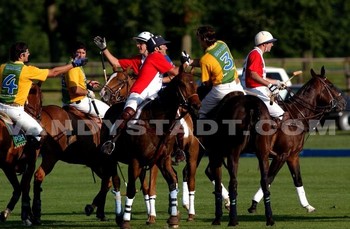
Le polo
Historique
Le nom Polo vient du tibétain 'spo-lo'.
"Roi des sports, sports des Rois", le Polo, discipline plutôt élitiste, est un des sports les plus anciens pratiqués au monde. Il trouve son origine en Perse env. 600 avant J-C. Le premier club de polo fut fondé par les Anglais en 1859 à Silchar dans l'Himalaya en Inde. A cette même époque, les colons l'ont fait connaître en Argentine. Les premiers règlements furent codifiés par le club de Hurlingham à Londres.
La Fédération Internationale , installée à Beverley Hills, fut fondée en 1983. Elle regroupe actuellement 48 pays-membres. Tout d'abord installé à Beverley Hills en Californie, le siège actuel se trouve à Vineuil-Saint-Firmin en France. Depuis 2005, elle est présidée par Patrick Guerrand-Hermès. Reconnue par le Comité International Olympique en 1987, elle organise la Coupe du Monde depuis 1987. La dernière édition s'est déroulée au Mexique en 2008, remportée par le Chili qui a battuen finale le tenant du titre, le Brésil. L'Argentine, championne olympique en 1924 et 1936, fait partie des grandes spécialistes.
Selon un extrait de ' Cent ans de polo en France' écrit par Jean-Luc A. Chartier
Polo Club Edition - Paris - 1992
Si l'on ne peut déterminer avec précision où et quand naquit le jeu de polo, on s'accorde cependant à considérer qu'il apparût il y a quelques 2500 ans, chez les peuples cavaliers des steppes de l'Asie Centrale, entre Chine et Mongolie. Il est ainsi le premier jeu de balles et de maillet du monde et peut-être, selon certains historiens, le plus ancien des sports d'équipe. Cependant, s'il ne plane aucun doute sur l'origine orientale du polo, c'est en Perse que l'on relève les premières traces de cette activité mi-sportive, mi-guerrière, qui allait traverser plus de deux millénaires pour parvenir jusqu'à nous. Dès son apparition, il est considéré comme un art noble, celui des meilleurs guerriers, puis celui des rois et des princes... Darius 1°, Roi de Perse (522-486 av. J-C.) fut sans doute le premier des grands joueurs. Dans cette grande puissance régnant sur l'Asie Mineure, le polo se nomme "chaugan" (maillet). Il est alors moins un sport au sens moderne du terme, qu'un mode d'entraînement des troupes d'élite - telle la garde du roi - et du monarque lui-même. C'est en fait une bataille miniature, à laquelle peuvent participer des dizaines de cavaliers dans chaque camp. Très vite, il devient le passe-temps favori des cours royales, dans cette civilisation brillante et dominatrice soutenue par des cavaliers habiles et infatigables. Activité noble et d'apparat, on y joue richement paré.
A la fin du IX° siècle de notre ère, l'historien musulman Tabari raconte, dans sa volumineuse "Chronique des prophètes et des rois", l'histoire de Darius III Codoman, roi de Perse entre 336 et 330 av. J.-C., qui envoie pour l'humilier, à Alexandre le Grand, roi de Macédoine, une balle et un maillet, lui signifiant ainsi que le jeu convenait mieux à son jeune âge et à son inexpérience que les activités guerrières. "La balle est la terre, et je suis le maillet", lui fit répondre Alexandre, certain de ses conquêtes futures ...
Mais autant qu'aux historiens, c'est aux poètes que l'on doit de nous rapporter les échos de la fabuleuse épopée du jeu de polo à travers les âges.
Au X° siècle, le grand poète persan Fidursi évoque dans son "Livre des rois", véritable histoire de la Perse, un tournoi ayant opposé, quelques siècles plus tôt sept cavaliers persans à sept turcs. Un prince, du nom de Siawusch aurait frappé la balle avec une telle vigueur qu'il aurait, dit le poète, "fait voir la lune de près".
Un autre poète persan, nommé Arifi, a écrit une ode allégorique sur le jeu princier : "L'homme est une balle lancée dans le champ de l'existence. En fait, une grande partie de la littérature persane ancienne abonde de références au chaugan et de métaphores inspirées du jeu. Au XII° siècle, Nezami, l'un des poètes majeurs de son temps, se sert de l'image du polo pour évoquer la vie :
Conduite ça et là par le maillet de la destinée
Que manie la main de la providence ..." En fait, une grande partie de la littérature persane ancienne abonde de références au chaugan et de métaphores inspirées du jeu. Au XII° siècle, Nezami, l'un des poètes majeurs de son temps, se sert de l'image du polo pour évoquer la vie : "La limite de ton terrain de polo est l'horizon. La balle sur la courbe de ton maillet, est la Terre. Avant de n'être plus que poussière, galope et force le pas de ta monture, car le monde t'appartient". Héritage architectural de cette passion de la Perse pour le jeu de polo, on peut admirer à Ispahan, capitale au XVI° siècle du royaume Séfévide, les restes d'un terrain de polo. De part et d'autre de la"place du Shah" longue de 274 mètres, (la taille d'un terrain d'aujourd'hui) se dressent deux ensembles de deux piliers de pierre représentant les buts, espacés de 7,5 mètres ! C'était le terrain de polo royal. Sur l'un des côtés, au niveau de la ligne de milieu, on éleva les sept étages du palais Ali Quapu, des galeries duquel on pouvait assiter au match.
De Perse, le polo allait s'étendre en Arabie et au Tibet. Là se forge le nom sous lequel il allait être connu aujourd'hui : on l'appelle alors "pulu", du nom de la racine, peut être celle du saule, dont la balle était faite. De là il se répendit jusqu'en Chine et au Japon, où il devait rencontrer un grand succès. De retour de Chine, poursuivons notre voyage à travers le temps et les vastes plaines du Proche et du Moyen Orient.
Nous sommes en Grèce au XII° siècle. L'empereur Manuel 1° Comnène (1118-1180), diplomate habile et courageux guerrier, joue avec les princes bizantins et les nobles de sa cour. Cinnamus, historien bizantin, nous a laissé une fort vivante description du polo de cette époque :
" Le jeu se déroule sur un terrain spécial. Une balle en cuir, de la taille d'une pomme, est lancée en l'air. A ce moment, comme s'ils se disputaient un trophée, les joueurs se mettent à galoper le plus vite possible. Chaque cavalier tient dans sa main droite un maillet de longueur moyenne. Chaque camp s'efforce de conduire la balle au-delà des lignes adverses."
Pas plus que la Grèce, l'Egypte n'échappe à la magie du polo. L'auteur arabe Nakrisi explique dans sa "Description du Caire et de l'Egypte" comment le noble sport prit racine dans l'Egypte des sultans, peu après la conquête du pays par les puissantes familles musulmanes, notamment grâce à El Nacer, qui s'intéressa tout particulièrement à tout ce qui concernait le cheval, son élevage et les jeux équestres. L'historien précise que de nombreux terrains réservés à ce que l'on appelait alors la "balle à cheval" étaient aménagés à proximité des palais.
Au début du XIII° siécle, Gengis Khan, fondateur de l'empire mongol, conquiert l'Iran et pénètre en Afghanistan. De ses campagnes en Asie mineure, il rapportera gloire et fortune, m is aussi le jeu de balle à cheval, dont il favorisera la pratique assidue chez ses meilleurs guerriers. Près d'un siècle et demi plus tard, son héritier spirituel et continuateur, Tamerlan, le vainqueur de la Horde d'Or, ordonnait à ses cavaliers, dit la légende, de jouer au polo avec la tête de ses ennemis. Importé, de l'ouest par les envahisseurs musulmans, de l'est par les Chinois, le polo atteint enfin l'immense territoire indien. On en découvre les premières traces en Inde au XIV° siècle. Akbar le Grand, empereur moghol de l'Inde (1542-1605), souverain élevé en exil en Afghanistan, en fut un adepte fervent. A Agra, en Inde du nord, on peut encore admirer ses grandes écuries de polo. Dans le "Aïn-i-Akbari", volume des mémoires d'Akbar rédigé par l'historiographe Abû Fazl, il apparait nettement que le chaugan est devenu un passe-temps des plus appréciés. Si certains observateurs n'y voient qu'un simple
ertissement, d'autres le considèrent comme un merveilleux mode d'instruction : formation de l'esprit de décision, apprentissage de la vitesse, violence du combat ... Il permet de tester la valeur d'un homme, de révéler sa personnalité. En outre, il consolide et renforce les liens d'amitié. Akbar est sans rival dans la pratique du polo. Il organise même parfois des parties nocturnes. On se sert alors de balles faites d'un bois à combustion lente. Enflammées, elles irradieront fortement et illumineront le jeu. pour magnifier encore la partie, il arrive que le roi fasse fixer des morceaux d'or à l'extrémité de son maillet. Si certains se détachent au cours du jeu, ils pourront être ramassés par le premier joueur qui les trouvera.
Lorsque l'empire moghol entame son déclin, le polo n'est plus pratiqué que dans certaines régions perdues de l'Hymalaya, proches des frontières indienne et tibétaine : Ladakh, Astor, Balistan et Gilgit.
C'est à Silchar, dans l'Etat de Malipur, à la frontière de la Birmanie, que des colons britanniques, planteurs de thé établis à Calcutta, l'y découvrent vers 1854. Quelques années plus tard, le polo allait être ramené en Europe par les régiments de cavalerie britanniques ayant séjourné dans l'empire des Indes.
"We must learn this game", s'écria Joseph Sherer, considéré comme le père du polo britannique. Joé Sherer est lieutenant, attaché à l'armée du Bengale, lorsqu'il assiste pour la première fois à une rencontre de polo. Ainsi, sous son impulsion le premier plo-club allait-il voir le jour. Cétait en 1859 à Silchar.
De Silchar, la découverte se communiqua rapidement à l'ensemble des régiments anglais de l'Inde.
Quelques années plus tard, en 1863, toujours sous l'influence de Joé Shirer, fut créé l'important Calcutta Polo Club, le plus ancien club de polo encore en activité. L'année suivante toujours plus passionné par ce nouveau sport qu'il avait contribué à développer au sein de l'armée, Sherer allait conduire de Silchar à Calcutta - alors distantes de deux journées de voyage - une équipe nommées "The Band of Brothers". Celle-ci infligea une défaite à la formation de Calcutta, de peu d'expérience et dotée d'une plus faible cavalerie. Les Brothers transmirent cependant à leurs adversaires une partie de leur technique et acceptèrent de leurs céder quelqes-uns de leurs meilleurs poneys.
Dès lors, le jeu allait s'étendre de façon extrêmement rapide. A la fin du XIX° siècle, on ne comptait pas moins de 175 polo-clubs dans tout le sous-continent indien.
En Angleterre, la première partie de polo disputée en Europe, se déroula en 1869 à Hounslow Heath - Middlesex - entre le 10° Hussards et le 9° Lanciers. A cette époque huit cavaliers composaient chaque équipe, les règles étant pratiquement inexistantes et le jeu se répartissait en seulement deux longues périodes pour près de quatre-vingt-dix minutes de jeu.
En 1875, fut fondée la "Hurlingham Polo Association", qui allait entreprendre une progressive codification du jeu. Il faudra attendre 1883 pour que le nombre de joueurs soit réduit à cinq, puis à quatre.
Et en 1888 pour qu'apparaisse le système des handicaps, destiné à rétablir l'équilibre entre des équipes de niveau différent.
Un tel succès n'allait pas tarder à s'étendre à d'autres pays, à commencer par ceux de l'empire britannique : Nouvelle-Zélande, Afrique du Sud, Australie et même Gibraltar et l'île de Malte.
Aux Etats-Unis, fin 1876, on joue les premières parties amicales à Manhattan, à la Dickels Riding Academy. En 1877 le premier polo-club nord américain, le Wetchester Polo Club est formé.
La première rencontre internationale, la Wetchester Cup fut disputée à Rhode Island en 1886. Opposant la Grande Bretagne aux Etats-Unis, elle s'acheva sur une victoire de l'équipe britannique de Hurlingham.
Poursuivant son chemin, la passion pour ce nouveau sport, vint s'établir en Amérique australe. En Argentine, le polo est accueilli avec d'autant plus d'enthousiasme que dans les estancias isolées au coeur de pampa il est une passionnante distraction pour le maître et ses gauchos. Ainsi, pour les besoins du polo, les meilleurs cavaliers du monde commencent-ils à dresser de petits chevaux à demi-sauvages, vifs et endurants. Dès lors allaient commencer à partir pour l'Europe des bateaux chargés de ces chevaux criollos, qui sont encore aujourd'hui les meilleurs poneys de polo du monde.
En France, le premier match se joue à Dieppe : une équipe française, emmenée par le duc de Guiche, rencontre une formation britannique. Nous sommes en 1880. L'épopée du polo français vient de commencer
Principe
Le polo se pratique sur un terrain de gazon de 275 m de long et 145 m de large le 'campo') avec un but à chaque extrémité. Deux équipes de 4 cavaliers s’affrontent pour marquer le plus grand nombre de buts en frappant avec un maillet de bambou (1,22 à 1,35 cm selon la taille du cheval), la balle de saule ou de plastique (99 à 128 gr, circ. 7,6 à 8,9 cm). La partie se joue en 4, 5, 6 ou 8 périodes de 7 minutes 30. La durée maximale est de 60 minutes. Les cavaliers changent de chevaux entre chaque période. Ils disposent de plusieurs chevaux et ont trois minutes pour changer de cheval à la fin de chaque pause. Après un but, les équipes changent de côté d'attaque.
La règle principale est que dès que la balle est en mouvement, aucun cavalier, ni même celui qui a frappé en dernier la balle, n'a le droit de franchir sa "ligne" (direction de la balle au moment où elle a été frappée pour la dernière fois).Au plus haut niveau, les chevaux sont souvent de race argentine: un croisement entre la race criolla, des petits chevaux locaux très robustes, et des pur-sang. Pour être un bon cheval de polo, il doit avoir de grosses qualités de vitesse, d'agilité, de robustesse et de 'freinage'. De petit taille, on les appelle poneys.
Le polo a été sport olympique jusqu'en 1936. C'est un sport d'élite en France avec seulement 600 licenciés à la Fédération Française de Polo qui est indépendante de la Fédération Française des Sports équestres.
Faits marquants :
- Les plus grandes stars sont des Argentins, qui ont tous atteint le handicap '10 goals' , la plus haute marche à atteindre en polo. Le meilleur français professionnel, Brieuc Rigaux, membre à Chantilly, est handicap 5. Gaëtan Charloux est le meilleur tricolore chez les amateurs avec handicap 3.
- Les tournois les plus prestigieux du monde sont organisés en Argentine entre septembre et le mi-novembre : l'Open d'Argentine, la Tortugas Open et l'Open de Hurlingham. Rares sont les joueurs ayant réussi de remporter ces trois compétitions dans une seule année (dénommé la 'Triple Crown').
- Les deux plus gros événements français sopnt la Coupe d'Or de Deauville organisé en août puis l'Open de France en septembre.
- La plus grande star du polo mondial est l'Argentin Adolfo Cambiaso qui évolue sous les couleurs du prestigieux club de La Dolfina, un club qu'il l'a fondé lui-même. Il est composé de quatre joueurs, tous handicap 10 (40 goals).
- Le match parfait en polo est une rencontre totalisant quatre-vingt goals (huit joueurs à handicap 10 chacun).
Pour la troisième fois de l'histoire et pour la première fois sur le Continent , une rencontre a opposé deux des meilleures équipes argentines totalisant quatre-vingt goals (soit le match parfait). C'était le 1 juin 2009 au Polo de Bagatelle à Paris entre les Granaderos (avec Facundo Pieres, Pablo MacDonough, Miguel Novillo et Bartolome Castagnola) et les Patricios (avc Agustin Merlor, Juan Martin Nero, Mariano Aguerre, Marcos Heguy). Victoire des Granaderos 11 à 10.
- Les joueurs de l’édition 2009 - Bagatelle, le match parfait
Granaderos: Bartolomé Castagnola, Miguel Novillo Astrada, Pablo Mac Donough, Facundo Pieres et Lucas Monteverde
Patricios: Marcos Heguy, Mariano Aguerre, Gonzalo Pieres, Juan Martín Nero et Agustín Merlos.
Granaderos: Pablo McDonough, Bautista Heguy, Gonzalo Pieres, Facundo Pieres, Bartolomé Castagnola
Patricios: Adolfo Cambiaso, Agustín Merlos, Ignacio Heguy, Miguel Novillo Astrada, Marcos Heguy
El Trébol: Alberto P. Heguy, Daniel González, Gonzalo Tanoira y Alfredo Harriott
Venado Tuerto: Horacio Heguy, Gastón Dorignac, Juan Carlos Harriott et Francisco Dorignac.
Les équipes - les joueurs - les remplacements - les équipements
Les chevaux - l'harnachement des chevaux
Article 1 - Les équipes
. Cf. pénalité n°91. Dans une équipe de polo le nombre de joueurs est de quatre.
Paddock-polo : le nombre de joueurs est limité à trois.
2. Dans chaque équipe un des joueurs sera désigné en qualité de Capitaine. Celui-ci aura seul le droit de représenter l'équipe auprès des arbitres pendant la durée du match, sauf en ce qui concerne l'article 23.7 concernant les harnachements et les équipements cassés ou défaits.
Article 2 - Les joueurs.
Cf. pénalité n°91. Un joueur ne peut jouer que dans une seule équipe pendant le même tournoi. (Voir Article 3.5 suivant)
2. Un joueur qui ne serait pas à jour de ses cotisations envers la Fédération Française de Polo, et/ou à qui il n'aurait pas été attribué de handicap, ne pourra jouer dans un tournoi (note 2/2).
Cependant, dans le cas où un joueur se blessait pendant la partie et était dans l'incapacité de la finir, un joueur qualifié de "remplaçant" dans les conditions de l'article 3 du présent règlement, lequel aurait été inscrit au tableau des
handicaps de la Fédération Française de Polo dans l'année précédente ou qui serait inscrit dans une Fédération de Polo étrangère, aura la possibilité dans les 24 heures ouvrables qui suivront le remplacement, d'obtenir une licence de la Fédération Française de Polo et de régulariser sa situation.
Le handicap à retenir sera déterminé en fonction des critères de l'article 14.32 ci-après.
Note 2/2 : La pénalité pour infraction à cette règle doit être infligée quelles que soient les circonstances et sans aucune excuse possible.
Contrairement aux autres fautes que l'arbitre peut choisir de ne pas sanctionner, la pénalité pour la violation de cette règle devra être infligée si un arbitre, le référé ou un membre du Comité, est averti de sa survenance dans les 24 heures après qu'elle ait été commise.
3. Un joueur ne peut participer à un tournoi au-dessus 12 goals que s'il a un handicap minimum de zéro.
4. Un joueur ou un officiel ne peut être admis dans l'enceinte d'un terrain de polo ni à ses abords, s'il est reconnu comme étant manifestement sous l'influence d'une drogue, d'alcool ou de toute substance qui pourrait altérer ses facultés physiques ou mentales.
Cette règle doit être appliquée avec la plus grande rigueur par les arbitres et le Comité d'Organisation du Tournoi.
5. Tout joueur participant à un tournoi s'oblige, sans aucune réserve, à accepter à tout moment de subir des prélèvements de sang, urine ou autre, jugés appropriés par la Fédération Française de Polo et le Comité
d'Organisation du Tournoi.
6. Quiconque ne pourra participer à une partie de polo, qu'il soit joueur ou officiel, s'il est malade ou blessé, et
notamment si son état de santé peut être considéré comme pouvant mettre en cause sa propre sécurité et celle des autres.
Cette règle doit être appliquée strictement par les arbitres et le Comité d'Organisation du Tournoi.
7. Tout joueur participant à un match doit pouvoir justifier de la possession de la licence fédérale de Polo en cours de validité.
Note 2/7 : Il appartient aux organisateurs du tournoi ou du match, de veiller au respect de cette règle et le cas échéant, d’interdire l’accès du terrain au joueur en cause.